
 Book a Demo

Critical to Quality Factors
Focus your study team on what matters most by defining the CTQ factors that drive patient safety, data quality and trial success.
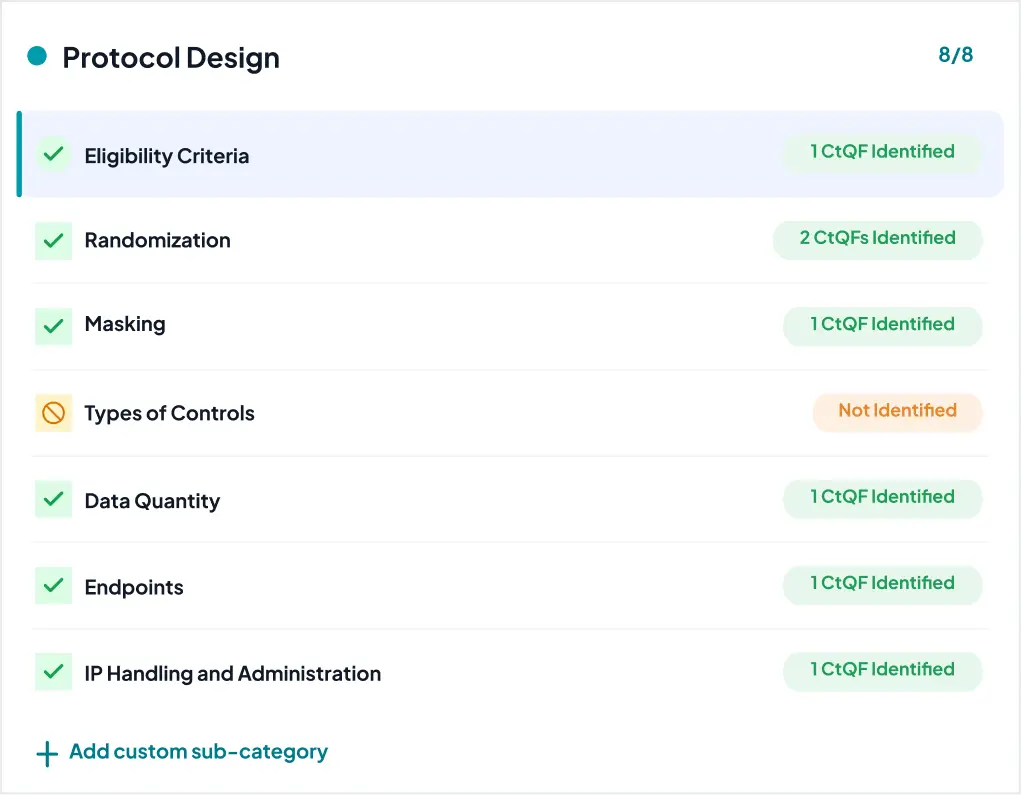
One purpose-built platform to identify, evaluate, control and continuously review clinical trial risks, with every decision and action fully traceable.
Focus your study team on what matters most by defining the CTQ factors that drive patient safety, data quality and trial success.
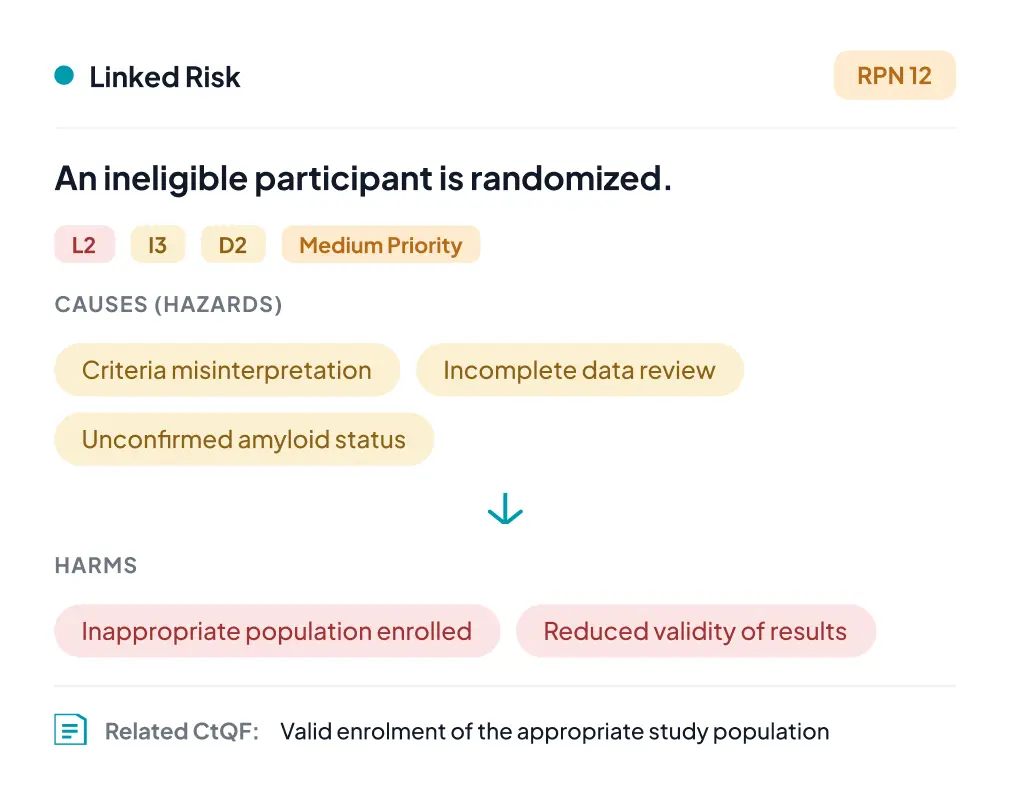
Identify study risks early, connect them to CTQ factors and build a clear, structured foundation for proactive risk management.
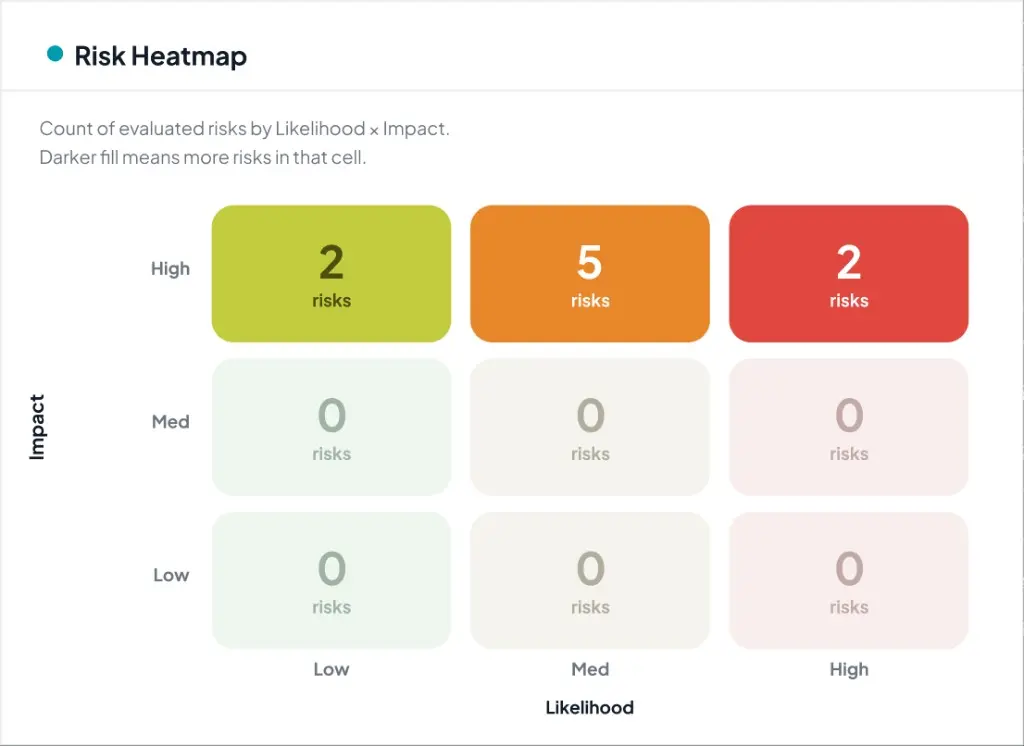
Prioritise risks using consistent likelihood, impact and detectability criteria, so teams know where to act first.
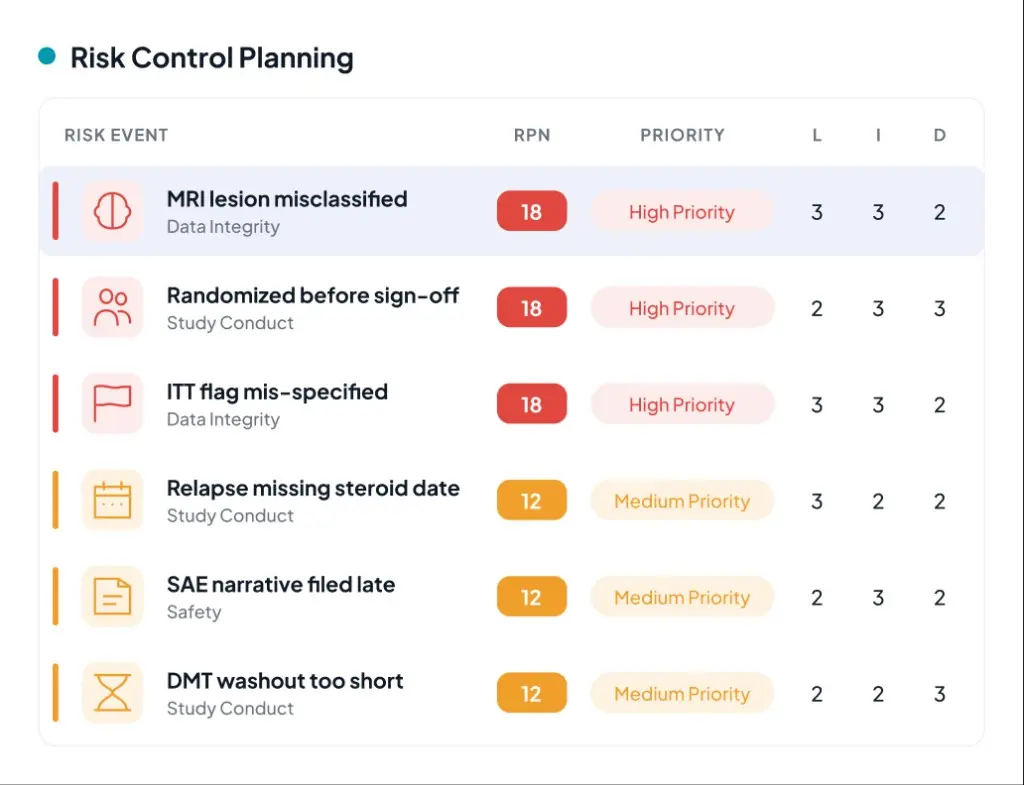
Convert risk insights into clear controls, actions, owners and timelines to reduce exposure and strengthen study oversight.
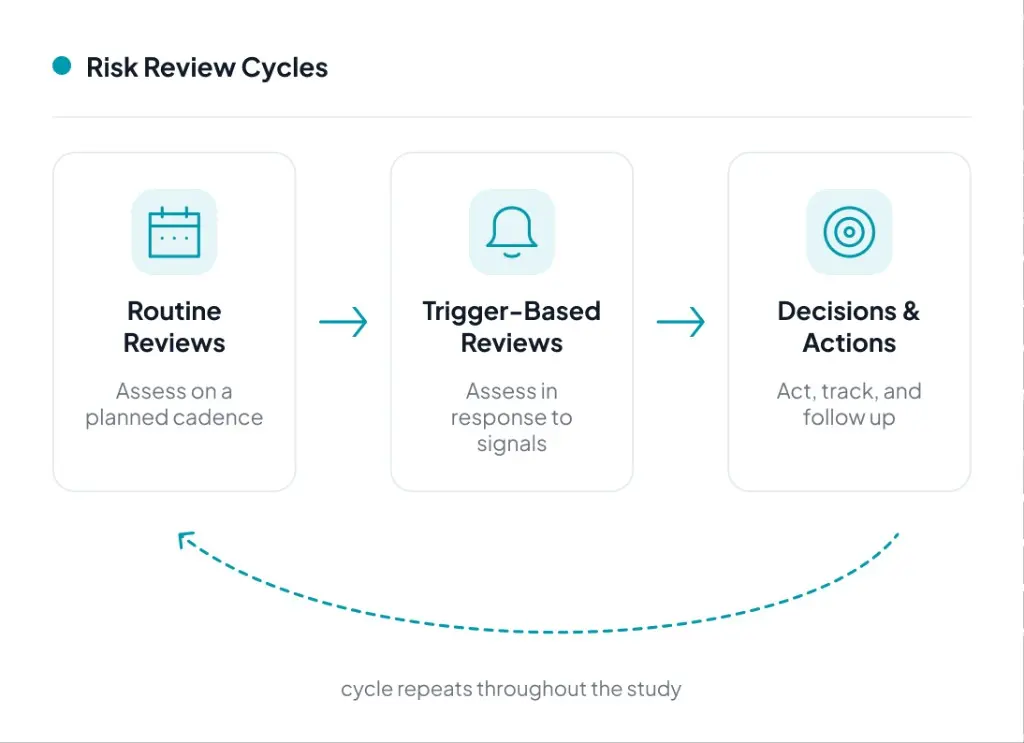
Keep risk management current with scheduled and trigger-based reviews that support timely decisions throughout the study.
WiseCLIN replaces fragmented spreadsheets, dashboards, emails and meeting minutes with one structured source of truth.
Critical-to-Quality factors are often documented during study planning but rarely linked to the risks, controls and metrics used during conduct. As a result, teams lose sight of what matters most to participant safety, data integrity and reliable study outcomes.
Risk assessments are frequently maintained in standalone Excel files that are difficult to control, update and share. This creates versioning issues, limits collaboration and makes it harder to ensure that risk information reflects the current state of the study.
Key Risk Indicators and Quality Tolerance Limits may sit across dashboards, reports and vendor platforms. Without a direct link to the underlying study risks, teams can see that a threshold has been crossed but struggle to understand its context, impact or required response.
Mitigation and control actions are often assigned and followed up through email chains. This makes it difficult to confirm ownership, due dates, implementation status and effectiveness, increasing the risk that important actions are delayed, overlooked or never formally closed.
Risk-related decisions may be recorded in lengthy meeting minutes without being connected to the relevant risk or action. Finding the rationale behind a decision becomes time-consuming, particularly during audits, inspections or team transitions.
Sponsors, CROs and functional teams may each maintain their own trackers, reports and risk records. When information is not centralised, teams can act on outdated or inconsistent data, creating gaps in communication, escalation and oversight.
Risk scores may change over time, but the reason behind the change is not always clearly documented. Without a complete history of assessments, evidence and decisions, it becomes difficult to explain whether a risk has improved, deteriorated or simply been reassessed differently.
Oversight activities may occur across meetings, emails, dashboards and reports, but the supporting evidence remains fragmented. Sponsors can struggle to show how risks were reviewed, challenged, escalated and followed through during the full study lifecycle.
Some risks are reviewed routinely, while others are only revisited after an issue occurs. Without defined review cycles, triggers and responsibilities, risk assessments can quickly become outdated and fail to reflect emerging study conditions.
Valuable knowledge from completed studies is often stored in archived files or retained only by individual team members. When risks, controls and outcomes are not captured in a reusable format, each new study starts from scratch and the same problems may be repeated.
A comprehensive oversight solution built for clinical trials — by experts who understand modern trials and are dedicated to your success.

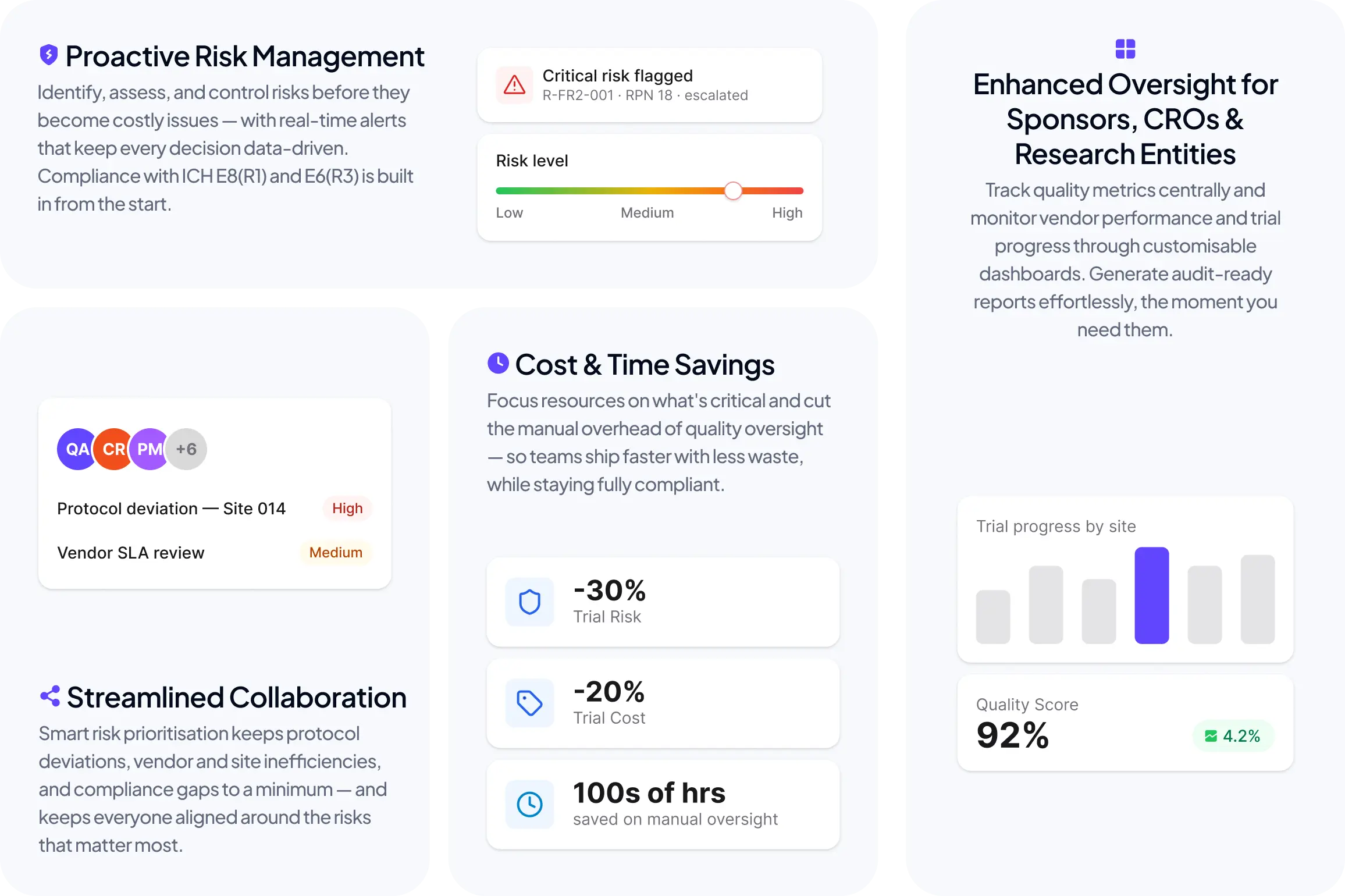
Smarter, risk-based oversight built to keep your clinical trials compliant, efficient, and in control.
The essentials on RBQM, WiseCLIN, and working with Qlarix.
 What is a Risk-Based Oversight System?
A Risk-Based Oversight System brings together the information, decisions and evidence needed to manage RBQM throughout a clinical trial. It connects Critical-to-Quality factors, study risks, controls, actions, metrics and review decisions, giving sponsors and CROs a clear and traceable view of how study risks are being managed.
How is WiseCLIN different from a risk assessment spreadsheet?
A spreadsheet records a risk assessment at a point in time. WiseCLIN supports the full operational RBQM lifecycle, including risk identification, scoring, controls, action tracking, residual risk, review cycles, decision history and oversight evidence.
It provides controlled workflows, clear ownership, version history and traceability that are difficult to maintain across separate spreadsheets, emails and meeting minutes.
Does WiseCLIN replace our CTMS, EDC or eTMF?
No. WiseCLIN is designed to complement your existing clinical systems.
Your CTMS manages study operations, your EDC manages clinical data and your eTMF stores essential documents. WiseCLIN connects the risk-based oversight process across those activities, helping your team understand what the information means, what action is required and how oversight decisions were made.
Can WiseCLIN be configured to our RBQM methodology?
Yes. WiseCLIN can be configured to reflect your organisation's risk-scoring model, terminology, tolerance levels, review frequencies, workflows and governance approach.
This allows you to standardise RBQM across studies while maintaining a methodology that aligns with your internal procedures and risk appetite.
Is WiseCLIN suitable for CROs?
Yes. WiseCLIN supports CROs managing RBQM activities across multiple sponsors, studies and functional areas.
It helps CROs provide greater transparency, standardise risk management processes and demonstrate how risks, actions and escalations are being managed on behalf of their clients.
Can it support multiple studies and portfolios?
Yes. WiseCLIN is designed to support multiple studies within a single environment.
Teams can manage study-level risks while gaining portfolio-level visibility across programmes, therapeutic areas or sponsors. This makes it easier to identify recurring risks, compare trends and apply lessons learned across studies.
How long does implementation take?
A standard WiseCLIN implementation can typically be completed in approximately two weeks.
This includes platform configuration, user and role setup, methodology alignment, onboarding, training and go-live support. Timelines may vary where integrations, SSO, data migration or more complex configuration are required.
Is WiseCLIN validated?
Yes. WiseCLIN is developed and maintained under a documented software validation lifecycle.
Qlarix provides a supplier validation package that includes relevant validation documentation, release information, change history and supporting system records. We can also support customer-specific validation activities, including intended-use assessment, UAT, PQ and traceability requirements.
Can Qlarix support our RBQM process as well as the software?
Yes. WiseCLIN is supported by clinical quality and RBQM experts who understand how risk-based oversight must work in practice.
We can help you define or refine your RBQM methodology, identify Critical-to-Quality factors, develop risk libraries, configure scoring models, train study teams and support implementation across your organisation.
Can we migrate existing study risk assessments?
Yes. Existing risk assessments can be migrated into WiseCLIN, subject to review of their format, quality and level of detail.
During implementation, we assess your current spreadsheets or risk records, map the information to the WiseCLIN structure and support your team in transferring relevant risks, controls and actions without losing important study history.
How does pricing work?
WiseCLIN pricing is based on three main components: initial implementation, annual platform and support, and the number of studies managed within the system.
Pricing can be scaled according to your study volume, number of users and configuration requirements. This provides a predictable model that can grow with your clinical portfolio.
What happens during a demo?
During the demo, we show how WiseCLIN supports the complete RBQM workflow—from Critical-to-Quality factors and risk identification through to controls, actions, metrics, review cycles and documented oversight.
We also discuss your current process, systems and challenges so the demonstration can focus on the areas most relevant to your organisation. You will leave with a clear understanding of how WiseCLIN could fit into your existing clinical operating model.

 Identify and address emerging risks earlier
Reduce manual effort and duplicated work
Strengthen ICH E6(R3) alignment and inspection readiness
Gain clearer oversight across studies, teams and portfolios